

So my friend Stephaine is not posting any prompts for the time being. So when I saw there were five WW2 historical fiction free, which is rare for me, the other side of the coin is that they are chucky, but I still want to share them with you.
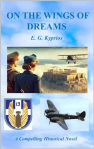
Goodreads Blurb:
Northern Greece, December 1940. Neither Maria nor the young Greek Air Force officer she meets can imagine how their lives will become so intertwined. As the war rages and keeps them apart, they each strive to defeat the enemy and liberate their motherland always living in hope that they will be together again one day. As their various missions take them through the Middle East to the African continent and then to wartime Italy, they struggle to keep in touch across the theatre of war. They will experience tragedy and sacrifice, success and adventure but unforeseen events on their chosen paths will pull them further away from each other until they finally meet again…
This historical narrative is a fascinating and true story of romance and heroism during the Second World War and the Greek Civil War that followed it, told from two perspectives, that of Maria and the Air Force Officer. There have been many accounts of such wartime heroism but this story is unique in its scope and personal detail. These two young people, both committed to their ideals, struggled to help liberate their country from the outside. They both faced loneliness and uncertainty, seeking out companionship but always hoping to find each other again. Maria’s account, taken from her personal notebooks, is shocking and unforgettable but her story is also an inspiring example of bravery and endurance. The author, Maria’s Greek flying officer, describes his own story of capture on Crete, his imprisonment and escape to join foreign squadrons to fight for the liberation of Greece. His recollections of his experience as a pilot and navigator during wartime and beyond are threaded through with humour and insight. As their two stories intertwine and move beyond the war years, their thoughts and dreams give them both hope and propel them forward in their lives.
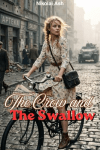
Goodreads Blurb:
Warsaw, 1943. The city is a cage. And someone inside the resistance is holding the key for the enemy.
Tadeusz Wrona has been lying for three years.
A former Polish intelligence officer, he plays the most dangerous game in occupied Warsaw — feeding the Gestapo carefully measured scraps of intelligence to protect the resistance operations that matter most. Every Thursday, he sits across from his German handler at a café and plays chess. Every Thursday, he decides who lives and who dies. The arithmetic always balances. Until it doesn’t.
When a shadowy agent codenamed SOWA — the Owl — begins leaking real intelligence to the Germans, resistance networks fall one after another. Nine cells. Dozens dead. And the countdown to the planned Warsaw Uprising — forty thousand hidden fighters, one chance to reclaim the city — is running.
Tadeusz is ordered to find the traitor. Quietly. Before everything is lost.
Kasia Mazur has been invisible for three years.
At seventeen, she is a courier for the Grey Ranks — the underground Polish Scouting organization made up entirely of teenagers. She carries messages in the soles of her shoes, memorizes addresses she’ll forget by nightfall, and rides her bicycle through German checkpoints with a smile that has saved her life more times than she can count.
Then she sees something she shouldn’ a trusted resistance figure shaking hands with a Gestapo officer. Taking an envelope. Walking away without looking back.
Her commander gives her a new follow the man. Prove he is the traitor. Bring the evidence.
She is certain. She is wrong. And the real traitor is closer than she could ever imagine.
What follows is a nine-month game of mirrors — two people hunting the same enemy from opposite sides, each convinced the other is the threat. As the clock ticks toward August 1, 1944, and the city prepares to rise, Tadeusz and Kasia must confront an impossible the person who betrayed them all is someone they both trusted with their lives.
Set against the historically devastating Warsaw Uprising, The Crow and the Swallow is a taut, morally complex thriller about the mathematics of betrayal, the cost of doing the right thing when every choice is terrible, and the fierce, stubborn courage of people who refuse to stop fighting — even when the odds say they should.
In occupied Warsaw, everyone is performing. The question isn’t who is lying. The question is who is lying for the right reasons.
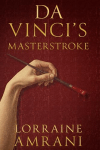
Goodreads Blurb:
When the guns fell silent in 1945, one man uncovered a secret the world was never meant to see.
Special Officer Max Page-Hamilton – art historian, British officer, and one of the famed Monuments Men – stumbled upon Reichsmarschall Hermann Göring’s looted treasure trove in the final days of the war. Hidden behind the stolen Mona Lisa lay a sealed envelope bearing Göring’s personal wax seal… and inside it, a revelation capable of shaking the foundations of art history. Papers penned by Leonardo da Vinci himself, words so explosive that Max locked them away, swearing never to unleash their consequences on a fragile postwar world.
Decades later, his granddaughter inherits not only his legacy, but the burden of truth he dared not reveal.
Now, as global tensions simmer and the art world stands at a precipice, she steps into the spotlight he avoided. What Leonardo wrote in the 16th century was no ordinary treatise – It was a masterstroke of genius, a confession, and a key. A secret capable of re-drawing the line between myth and history, power and obsession, beauty and deceit.
From the salons of occupied Paris to the shadowy corridors of the contemporary art market, Da Vinci’s Masterstroke weaves together wartime intrigue, artistic passion, and a mystery that transcends centuries. Rich with historical detail, driven by emotion, and brimming with suspense, Lorraine Amrani crafts a thriller for art lovers and truth seekers alike, a story where every masterpiece hides a motive, and every revelation comes at a price.
What if the world’s most celebrated painting was never the real story?
Open the envelope. Follow the clues. Discover the secret that could turn the art world upside down.
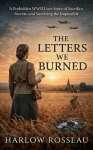
Amazon Blurb:
In occupied France, the most dangerous thing she carried wasn’t the downed airman hidden in her cellar. It was the letter she couldn’t bring herself to burn.
- The Dordogne Valley, France. As the German occupation tightens its grip on the quiet village of Sainte-Clémentine, British Red Cross nurse Eleanor Marsh arrives under cover of darkness with a mission she cannot speak aloud and a grief she cannot put down — her brother, killed in the London Blitz, exists now only in the unsent letters she writes him by lamplight. Ellie is a woman who fixes things. Who controls things. Who has built her survival on the belief that surrender is the one wound she cannot afford.
She does not expect the German officer who reads Rilke in the rain.
Colonel Stefan Brandt is everything the war says he should be — uniformed, authorized, occupying — and nothing the war prepared her for. An Austrian of conscience trapped inside a regime he privately despises, Stefan has spent eleven years telling himself that quiet resistance is not the same as complicity. That managing the damage is enough. That survival inside the wrong thing is better than dying for the right one. And then Eleanor Marsh arrives in his village, quotes Rilke back at him under a church eave, and makes his careful calculations impossible.
What begins as a charged professional encounter between enemies becomes something neither of them has language for — a forbidden wartime romance built in whispered river-path meetings, Resistance secrets, coded letters, and the devastating trust of two people who recognize each other across every line the war has drawn between them. When a downed RAF airman hidden in the inn’s cellar requires extraction through a German checkpoint, Ellie must ask Stefan for the one thing that could destroy them both. And Stefan must finally answer the question he has been avoiding for eleven years: is quiet compliance courage — or its most elegant disguise?
Set against the atmospheric backdrop of rural wartime France, The Letters We Burned is a sweeping historical fiction novel for readers who love immersive WWII stories, complex forbidden romance, and heroines who choose love not as weakness but as the most radical act available to them. Fans of The Nightingale by Kristin Hannah, All the Light We Cannot See by Anthony Doerr, The Alice Network by Kate Quinn, and Beneath a Scarlet Sky by Mark Sullivan will find in Ellie and Stefan a love story that is equal parts heartbreak and hope — one that asks not whether love can survive a war, but what kind of person love makes of you when survival itself is not guaranteed.
Because some things, once written, cannot be unwritten. Some fires don’t destroy what they burn. And some people find each other across impossible distances — and discover that the finding changes everything that comes after.
The Letters We Burned is a story about the quiet heroism of the resistance fighter and the conflicted soldier, about grief and guilt and the specific courage of opening yourself to another person when the world is designed to prevent it. It is about the letters we write to the dead, the choices we make under occupation, the cost of love across enemy lines — and the stubborn, imperfect, persistent way that broken things keep making their noise.

Amazon Blurb:
Provence, 1943. She destroyed his family. Now she must save his life.
Élodie Marchand has spent two years drowning in guilt. One involuntary glance at a Nazi checkpoint—a split-second of eye contact she couldn’t control—sent her Jewish neighbors to their deaths. The Lévy family: the father who taught her to prune vines, the mother who braided her hair, and Sarah, her best friend since childhood. Gone. Because of her.
Now Élodie runs her father’s vineyard alone, visiting the empty Lévy house every week, whispering apologies to ghosts who cannot forgive her.
Then Gabriel Lévy returns.
Sarah’s older brother. The surgeon who escaped. The man who has every reason to want Élodie dead.
When the Resistance brings a wounded Jewish doctor to hide in her wine cellar, Élodie doesn’t recognize him at first. But Gabriel knows exactly who she is. He’s read her diary. He’s seen the words she wrote forty-seven times: I killed them. I killed them. I killed them.
He came back to Provence for answers. What he found was the woman who destroyed everything he loved.
Now they’re trapped together.
German patrols tighten around the village. The Gestapo suspects the vineyard. And Gabriel must decide: Is Élodie the monster he’s imagined for two years, or is she something far more complicated?
As the danger grows, so does something neither expected. Every shared glance, every accidental touch, every midnight conversation in the cellar where her family’s wine ages and his hatred slowly ferments into something else entirely.
But Gabriel holds a secret of his own. He knows what Élodie did. And she doesn’t know he knows.
 Mybookworld24